+82 10 9893 2839


In modern civil engineering and the construction materials industry, three cement systems dominate the market: Ordinary Portland Cement (OPC), Calcium Aluminate Cement (CAC), and Calcium Sulfoaluminate Cement (CSA). Although OPC remains the most widely used foundational material in everyday construction, CSA cement has emerged as a star alternative in the field of high-performance building materials since its discovery in the 1960s and industrialization in the 1980s. Known for its combination of rapid setting, high early strength, micro-expansion/low shrinkage, and superior resistance to corrosion, CSA cement plays an irreplaceable role in rapid repair, precast components, self-leveling floors, non-shrink grouts, and coastal engineering.
The core mineral of CSA cement—ye'elimite ($\text{C}_4\text{A}_3\bar{\text{S}}$)—was first discovered and thoroughly researched by scientists in the 1960s. Researchers recognized that this unique mineral phase had the potential to solve the major pain points of traditional OPC cement, such as slow setting times, high shrinkage, and vulnerability to sulfate attack.
As a pioneer in the research and application of CSA cement, the China Building Materials Academy (CBMA) was the first to master industrial calcination and control technologies in the 1970s and 1980s, achieving large-scale commercial production (often referred to in China as "Rapid-Hardening Sulfoaluminate Cement"). Since then, driven by the global surge in demand for efficient and green construction materials, the production and application of CSA cement have expanded rapidly across Europe, the Americas, and worldwide, making it a critical material in specialty engineering.
The production of CSA cement requires precise raw material ratios and strict processing:
Proportioning: Calcium-rich materials (such as limestone), aluminum-rich materials (such as bauxite or high-alumina industrial byproducts), and sulfur-rich materials (such as gypsum) are blended and ground in precise proportions.
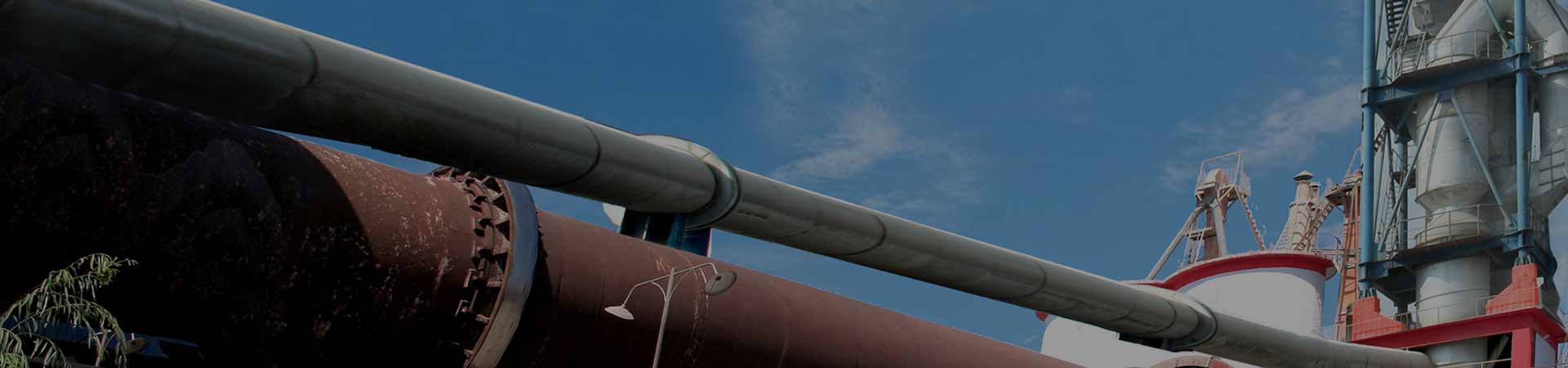
High-Temperature Calcination: The raw mix is burned in a rotary kiln. Unlike OPC, which requires calcination temperatures up to 1450°C, CSA cement only requires temperatures around 1250°C to 1350°C.
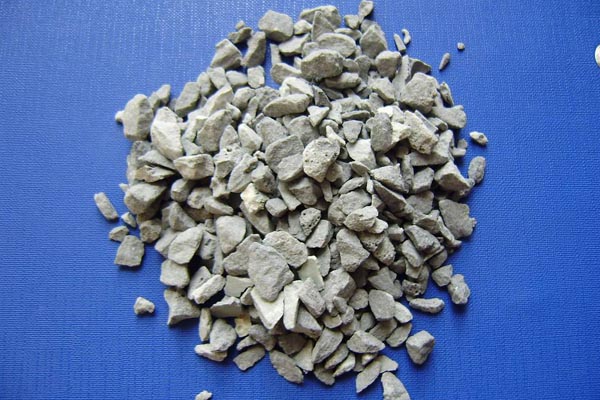
Clinker and Finished Product: The resulting clinker mainly consists of ye'elimite ($\text{C}_4\text{A}_3\bar{\text{S}}$), dicalcium silicate ($\text{C}_2\text{S}$), and ferrite solid solutions. Finally, the clinker is ground together with an appropriate amount of gypsum (or anhydrite) and mineral admixtures to produce the finished CSA cement.
CSA cement provides breakthrough solutions to overcome the limitations of traditional OPC and CAC in specific construction scenarios.
Ultra-Fast Setting: Initial setting times can be controlled between 5 minutes and 1 hour (and can be flexibly adjusted using retarders), drastically reducing construction waiting times.
Exceptionally High Early Strength: Hydration occurs extremely fast, reaching over 20 MPa in 1 hour and over 90 MPa in 3 days. This rapidly provides structural load-bearing capacity and significantly speeds up formwork turnover rates.
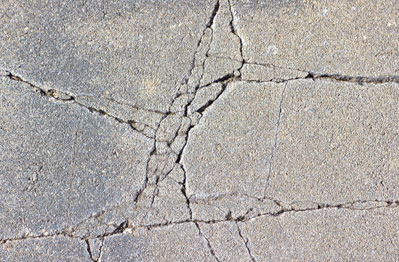
Micro-Expansion and Shrinkage Compensation: In early hydration, CSA forms large amounts of ettringite, which generates controlled micro-expansion. This offsets subsequent drying shrinkage, achieving crack-resistant performance with near-zero shrinkage.
Strong Adaptability and All-Weather Construction: Concentrated exothermic hydration gives CSA excellent frost resistance, making it ideal for winter or cold-weather construction. Additionally, CSA cement has a natural affinity for beach sand and seawater, allowing them to be used directly in mixing.
Outstanding Durability: Its unique hydrated product structure renders high resistance to freeze-thaw cycles, impermeability, sulfate attack, chloride penetration, and magnesium ion ($\text{Mg}^{2+}$) erosion. Long-term field tests show that CSA structures placed in humid or marine environments for decades remain in pristine condition.
Capacity and Regional Limitations: Due to the geographical distribution of high-quality raw materials like bauxite, high-grade CSA cement production is currently concentrated in a limited number of countries and regions.
High Learning Curve: Compared to mature OPC technology, many design institutes and contractors lack a systematic understanding of CSA's hydration mechanisms and mix design control, leading to hesitance in adoption.
Specialized Grades: CSA cement is not a "one-size-fits-all" material. Different applications demand strict selection among specialized grades, such as rapid-hardening, expansive, or self-stressing variants.
Thanks to its fast-setting, high-strength, low-shrinkage, and durable characteristics, CSA cement plays an indispensable role in many critical engineering fields:
Road and Runway Repairs: Used in heavily traffic-restricted areas such as airport runways, highway pavements, and bridge expansion joints, enabling repairs and reopening to traffic within hours.
Precast Concrete: Accelerates demolding and turnover rates of precast elements, reduces energy costs associated with steam curing, and produces high-quality segments and pipe piles.
Self-Leveling Flooring: Leverages its high fluidity, early strength, and non-shrink properties to rapidly lay flat, crack-free industrial and commercial floors.
Non-Shrink Grouts: Serves as a core binding component for secondary grouting of equipment foundations and wind turbine base fixations, ensuring a tight and solid bond.
Shotcrete: In tunnels, mining, and slope stabilization, CSA shotcrete offers strong adhesion and low rebound rates, rapidly forming an initial support layer.
Marine and Anti-Corrosion Engineering: Used for seawalls, pier pilings, and other coastal structures exposed to long-term seawater impact and salt spray corrosion.
Cutting-Edge Emerging Technologies: Demonstrates immense innovative potential in 3D concrete printing (which requires rapid shape retention), soft soil stabilization, and artistic concrete sculptures.
In the context of global carbon neutrality, CSA cement is widely recognized as an eco-friendly green cement:
Significant Carbon Reduction: The calcination temperature of CSA is about 100°C to 150°C lower than that of OPC, significantly cutting fuel consumption. Furthermore, because less limestone is used in the raw mix, $\text{CO}_2$ emissions from decarbonation are drastically reduced. Overall, CSA production generates 20% to 40% lower $\text{CO}_2$ emissions compared to traditional Portland cement.
High Utilization of Industrial Wastes: CSA clinker and blended systems can incorporate substantial amounts of industrial byproducts—such as flue-gas desulfurization (FGD) gypsum, blast furnace slag, and fly ash—realizing high-value resource recycling.
Extended Infrastructure Lifespan: Structures built with CSA exhibit longer service lives and extremely low maintenance frequencies, saving resources and energy over their entire lifecycle (LCA).
In summary, Calcium Sulfoaluminate (CSA) cement, as a high-performance, low-carbon, and eco-friendly specialty binder, is gradually breaking the market dominance of traditional Portland cement. Although it still faces challenges regarding cost and widespread technical awareness, the growing global demand for rapid construction, structural durability, and carbon reduction positions CSA cement to play an increasingly vital role in future modern building and infrastructure projects.