WhatsApp
+82 10 9893 2839
Oreworld Trade (Tangshan) Co., Ltd.
Contact Us

CSA Cement for Concrete Repair: Fast-Track Solutions for Bridges, Runways and Industrial Floors

Table of Content [Hide]

    In repair and maintenance work, time is the most expensive material on the bill. Every hour a bridge lane, runway strip or warehouse floor stays closed translates into traffic delays, lost throughput and contractor standby costs. This is exactly the problem calcium sulfoaluminate (CSA) cement was engineered to solve: repairs that reach structural strength in a fraction of the time Portland cement requires.

    Why CSA Cement Excels in Repair Work

    CSA cement owes its performance to a rapid ettringite-forming hydration reaction. The practical consequences for repair contractors are significant:

    • Rapid strength gain: 20–30 MPa compressive strength within 2–4 hours at 20°C is realistic with properly proportioned mixes, allowing same-day reopening of trafficked surfaces.
    • Low drying shrinkage: CSA binders generate minimal drying shrinkage — and with expansive formulations can even compensate it — reducing the risk of the debonding and cracking that plague thin OPC repair overlays.
    • Low carbon footprint: CSA clinker is fired at roughly 1,250°C versus 1,450°C for Portland clinker and releases less CO₂ from decarbonation, cutting binder emissions by roughly 30–50%. Repair projects increasingly carry embodied-carbon requirements, and CSA helps meet them.
    • Cold-weather performance: CSA hydration generates substantial early heat and proceeds at low temperatures, enabling winter repairs that would be impossible with ordinary cement.

    For a deeper technical comparison, see our analysis of CSA cement versus Portland cement.

    Application 1: Bridge Deck and Highway Repairs

    Partial-depth and full-depth deck repairs are the classic fast-track scenario. A typical night-work sequence:

    1. 11:00 PM — saw-cut and remove deteriorated concrete, clean and saturate-surface-dry the substrate.
    2. 12:00 AM — place CSA repair mortar or concrete; bond coat the substrate for full contact.
    3. 2:00–4:00 AM — strength reaches reopening threshold; cure minimally (CSA concrete needs less wet curing than OPC due to its self-desiccating early hydration).
    4. 5:00 AM — lane reopened to traffic.

    Blends of CSA cement with Portland cement (often 10–20% CSA) are frequently used here to fine-tune open time for larger patches while preserving rapid strength. Our concrete urgent repair application page details recommended grades and mix designs.

    Application 2: Airport Runways and Taxiways

    Airfield repairs must fit tight night-closure windows and satisfy strict FAA/ICAO flexural-strength reopening criteria. CSA-based rapid repair mortars routinely achieve the required flexural strength (typically 2.5–3.5 MPa) within 3–4 hours, keeping runway downtime to a single night. Low shrinkage matters doubly here: thin bonded overlays on slabs-on-grade are highly shrinkage-sensitive.

    Application 3: Industrial Floors and Cold Stores

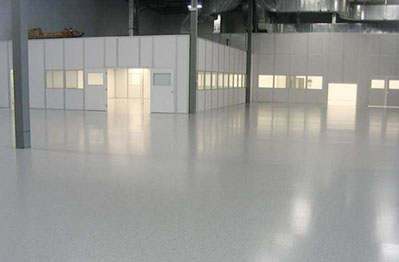
    Warehouses and factories cannot afford days of downtime in high-traffic aisles. CSA repair mortars and screeds allow:

    • Joint and spall repairs finished and reopened within one shift
    • Forklift-ready surfaces in 24 hours
    • Repairs in refrigerated environments, where OPC hydration essentially stops — CSA continues to gain strength at temperatures as low as -5°C with suitable mix temperature management

    Application 4: Tunnels, Marine Structures and Water Treatment Plants

    CSA's low permeability and rapid set make it suitable for tunnel segment repairs, invert castings under live rail/headroom restrictions, and marine splash-zone patches where tide windows dictate timing. For structures where shrinkage cracking is the dominant failure mode, expansive CSA-based binders provide shrinkage compensation rather than mere shrinkage reduction.

    Specifying a CSA Repair: A Short Checklist

    • Define the reopening strength and time (compressive or flexural) at the actual element temperature — not the lab temperature.
    • Choose the binder strategy: pure CSA for maximum speed; CSA/OPC blends for balanced open time and economy; expansive grades for shrinkage-sensitive overlays.
    • Verify bond: substrate preparation (removal to sound concrete, roughness ≥ CSP 4–5, SSD condition) remains the #1 determinant of repair durability regardless of binder speed.
    • Trial batch on site, at site temperature, mixing the exact equipment and crew that will do the work.

    Choosing the Right Grade

    Grade selection follows the strength-class logic of any cement: our CSA Cement 42.5 suits mortar-type repairs and screeds, while 62.5/72.5 grades deliver the highest early strength for heavily loaded structural patches. Ready-to-blend options such as Super CSA Cement 62.5 simplify dosing for site-blended rapid concrete.

    Fast repairs are only fast if the planning is fast too. Our technical team supports mix design, trial batching and site training — contact us to discuss your next repair window.

    Related Products
    CSA Cement for Concrete Repair: Fast-Track Solutions for Bridges, Runways and Industrial Floors
    References