For over a century, Ordinary Portland Cement (OPC) has served as the undisputed backbone of modern infrastructure. However, with the construction sector contributing roughly 7% to 8% of global greenhouse gas emissions and facing mounting pressure to decarbonize, the search for high-performance, low-carbon binders is no longer theoretical—it is urgent.
Among the alternatives, Calcium Sulfoaluminate (CSA) cement—alongside its variant, Belite Calcium Sulfoaluminate (BCSA)—stands out as one of the few commercially mature, field-tested solutions capable of outperforming standard concrete in both speed and sustainability.
1. What Is CSA Cement? The Core Chemistry
The origin of CSA cement traces back to Alexander Klein’s groundbreaking work at the University of California, Berkeley, in the 1960s (giving rise to the mineral term Klein’s compound), with subsequent large-scale industrialization led by the China Building Materials Academy in the 1970s and 1980s.
Unlike Portland cement, which relies on alite (C3S) and belite (C2S) to form calcium silicate hydrate (C-S-H) gel, CSA cements are governed by ye’elimite (C4A3S̄\ or 4CaO ·3Al2O3 ·CaSO4 ).
Primary Hydration: When mixed with water and gypsum (CaSO4· 2H2O), ye’elimite rapidly reacts to synthesize abundant crystalline ettringite and aluminum hydroxide:
C₄A₃S̄ + 2CS̄H₂ + 34H → C₆AS̄₃H₃₂ (Ettringite) + 2AH₃
Rapid Crystallization: Unlike late-stage ettringite formation in deteriorating OPC (which causes disruptive internal cracking), the early, controlled matrix of ettringite formed during the first hours of CSA hydration delivers rapid structural rigidity and density.
2. Why CSA Cement Matters: The Performance Advantage
28-Day Strength in 24 Hours
CSA concretes routinely exceed 5,000 psi (35 MPa) in under 24 hours, with some specialized formulations achieving 20 MPa in a single hour and up to 90+ MPa within 3 days. For critical infrastructure—such as overnight airport runway rehabilitations, bridge deck repairs, and busy freeway repaving—CSA allows traffic to reopen within hours rather than weeks.
Shrinkage Compensation and Dimensional Stability
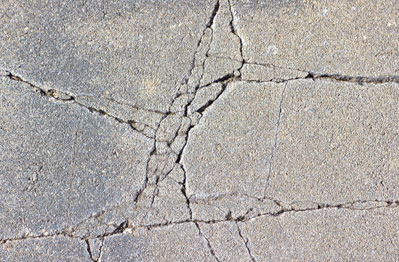
Drying shrinkage is the root cause of cracking, edge curling, and aesthetic defects in architectural castings, countertops, and flatwork. CSA cements feature natural micro-expansion properties during initial hydration. Because ye’elimite hydration chemically binds substantial water into ettringite (requiring a baseline water-to-cement ratio around 0.35 or higher), there is less unevaporated free water left to cause drying shrinkage.
Lower Alkalinity and Chemical Durability
CSA cements hydrate to an internal pore-solution pH of 10.5–11.0, compared to the highly alkaline pH of ~13.0 found in OPC. This dramatically reduces the risk of Alkali-Aggregate Reaction (AAR/ASR), enabling safe pairing with reactive aggregates, glass fibers, decorative glass embeds, and metallic accents. Additionally, CSA systems offer natural resistance to sulfate attack, seawater, and freeze-thaw cycles.
3. The Green Factor: Slashing the Clinker Footprint
The carbon abatement potential of CSA and BCSA binders comes from two physical mechanisms:
| Parameter | Ordinary Portland Cement (OPC) | Calcium Sulfoaluminate (CSA / BCSA) |
| Kiln Clinkering Temp | ≈ 1450℃ − 1500℃ | ≈ 1250℃ |
| Limestone Requirement | | |
| Clinker Grindability | Harder, energy-intensive | Softer, brittle, less mill energy |
| Direct Process CO₂ | High decarbonation footprint | |
By replacing limestone (CaCO₃) raw feed with bauxite and calcium sulfates, the unavoidable process emissions caused by limestone calcination are substantially curtailed. Furthermore, operating kilns at 1250℃ saves significant thermal fuel energy.
4. Expanding the Horizon: Belite-CSA (BCSA)
While pure CSA cements are rapid-setting sprint champions, their long-term strength plateau and higher raw material costs prompted the development of Belite Calcium Sulfoaluminate (BCSA).
BCSA pairs the early-strength burst of ye’elimite with the steady, progressive hydration of dicalcium silicate (belite / C₂S). This hybrid mineralogy offers:
Controlled early setting with sustained, decades-long strength gains.
Improved economic feasibility by reducing the proportion of expensive aluminum-bearing raw feeds (such as bauxite).
Scalable potential for structural precast, prestressed elements, and architectural elements where fast turnaround and long-term durability are both required.
5. Working with CSA: Practical Nuances and Caveats
CSA cement behaves fundamentally differently from traditional Portland cement. Understanding its operational characteristics is essential:
Strict Chemical Admixture Incompatibility: Standard organic cement retarders do not work reliably with CSA systems. Set retardation requires citric acid-based admixtures.
Do Not Add Standard Pozzolans: In OPC mixes, supplementary cementitious materials (fly ash, slag, silica fume, metakaolin) react with liberated calcium hydroxide (CH). CSA hydration produces aluminum hydroxide (AH₃), not CH, and its lower alkalinity cannot trigger typical pozzolanic reactions. Incorporating pozzolans like metakaolin or VCAS can weaken CSA matrices by up to 30%
Temperature Sensitivity and Working Windows: Unretarded CSA cement can flash set in 5 to 15 minutes in warm weather ($>25^\circ\text{C}$). Tight process controls, well-practiced batching, and tailored retarder dosages are mandatory.
Curing Requirements: While wet curing duration is short (often just 3 to 4 hours post-casting), it must not be skipped. The intense exothermic reaction demands immediate external water to prevent early-age surface desiccation and micro-cracking.
6. The Road Ahead: Harmonization and RILEM TC 326-CSA
Despite decades of regional use in China and North America for pavement patching, specialty dry-mix mortars, self-leveling underlayments, and precast countertops, widespread structural adoption has lagged behind commercial potential.
The primary bottleneck is standard specifications: building codes, DOT guidelines, and ASTM/EN standards remain fundamentally built around OPC chemistry.
To bridge this divide, global bodies such as RILEM initiated Technical Committee 326-CSA (Calcium sulfoaluminate-based cement and concrete). Bringing together academic researchers, standard-setting bodies, and industry stakeholders across Europe, Asia, and the Americas, TC 326-CSA focuses on:
Standardizing clinkering thermodynamics and classification nomenclature.
Clarifying long-term durability issues, such as carbonation rates in reinforced elements and behavior under elevated temperatures ($>60^\circ\text{C}$).
Establishing multi-laboratory testing protocols to give engineers, contractors, and agencies the testing data needed to specify CSA and BCSA binders with confidence.
Final Thoughts
Calcium sulfoaluminate cements represent an attractive synthesis of speed and sustainability. Whether utilized in rapid highway repairs, architectural precast elements, or low-carbon concrete design, CSA and BCSA cements prove that cutting concrete’s carbon footprint does not have to come at the expense of early structural strength.