+82 10 9893 2839


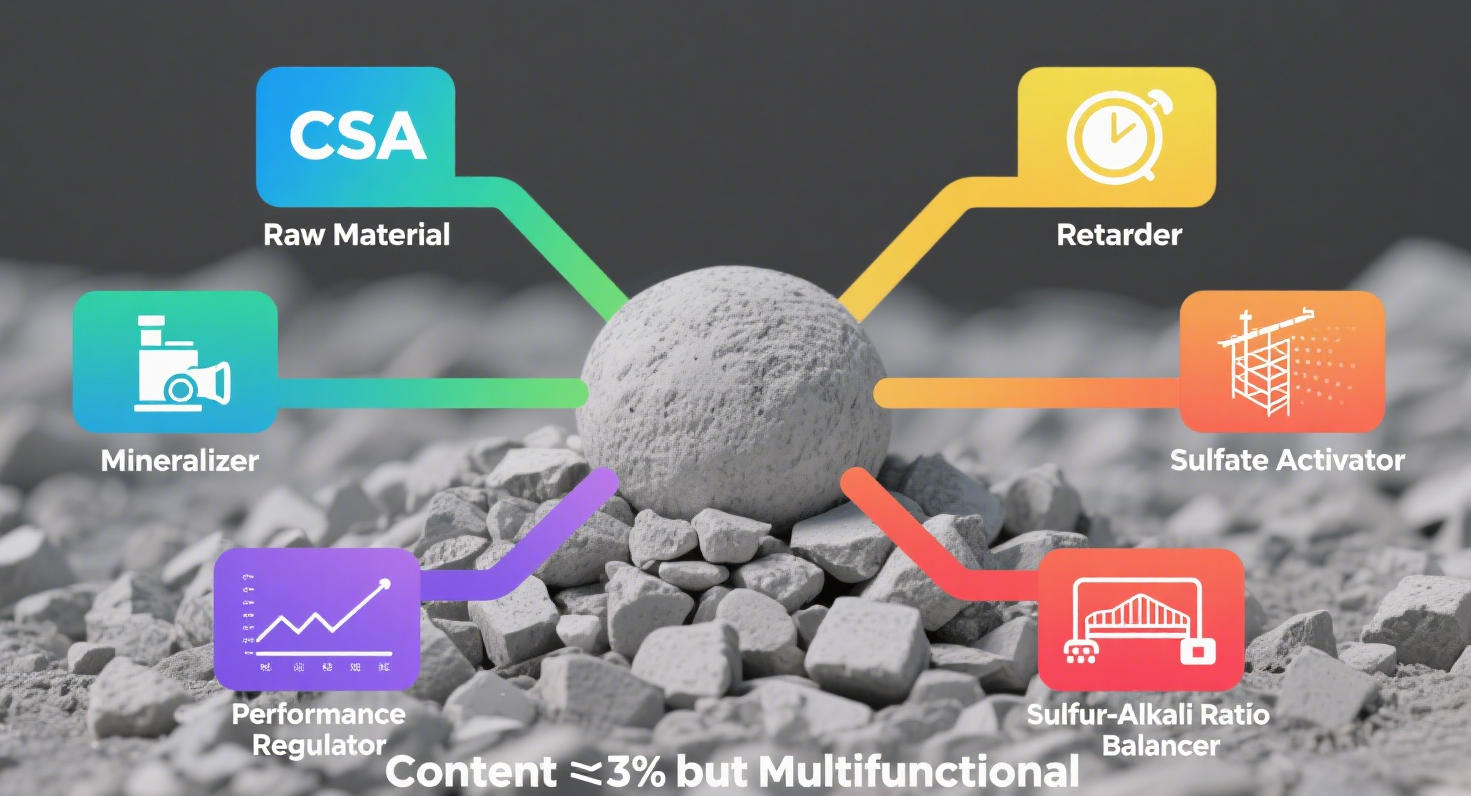
Gypsum can be used as a raw material for various types of cement. For example, CSA cement, slag-gypsum cement, and gypsum bauxite expansive cement can all use gypsum as a main component. Adding gypsum not only improves the performance of these cements but also reduces production costs.
In the cement production process, gypsum can be used as a mineralizer. It can lower the calcination temperature, thus saving coal and energy. This not only helps reduce production costs but also decreases carbon dioxide emissions, having a positive impact on environmental protection.
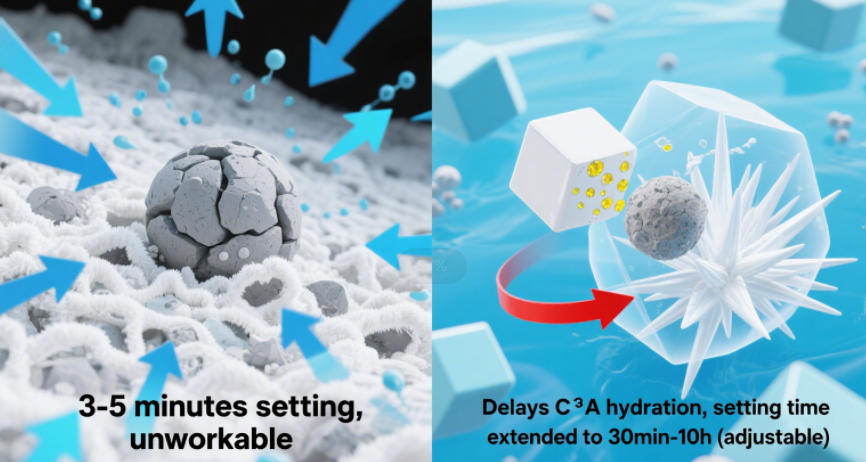
One of the most well-known functions of gypsum is as a cement retarder. It can delay the setting time of cement to meet national standards and user requirements. This is crucial for the mixing, transportation, and construction of concrete. Without gypsum, the cement would quickly set during mixing, leading to mixing and construction failures.
Gypsum can also be used as a sulfate activator to activate the industrial waste residues like fly ash and slag, thereby improving the strength of fly ash cement and slag cement. This function makes gypsum significant in resource recovery and waste utilization.
The appropriate amount of gypsum can significantly improve the performance of cement, including strength, shrinkage, and corrosion resistance. By adjusting the amount of gypsum added, various properties of the cement can be optimized to better suit different engineering needs.
During the calcination of cement clinker, SO2 from gypsum can balance the sulfur-alkali ratio, reducing the likelihood of crusting and clogging. This improves the efficiency of the calcination process and extends the lifespan of refractory materials. This plays an important role in enhancing the stability and efficiency of cement production.
The main role of gypsum in cement is to delay the setting time, which is very beneficial for the mixing, transportation, and construction of concrete. Without gypsum, C3A in cement would dissolve rapidly and form calcium aluminate hydrate, causing the cement paste to set rapidly. The appropriate amount of gypsum can react with C3A and Ca(OH)2 to form insoluble ettringite (C3A•3CaSO4•Ca(OH)2), thereby delaying the setting time of the cement.
The main chemical composition of gypsum is calcium sulfate, with the following specific components:
CaO: 32.5%
SO3: 46.6%
H2O+: 20.9%
Gypsum undergoes multiple dehydration stages when heated:
105-180℃: Releases 1 water molecule, turning into calcined gypsum (Ca[SO4]•0.5H2O), also known as hemihydrate gypsum.
200-220℃: Releases the remaining half water molecule, turning into type III anhydrous gypsum (Ca[SO4]•εH2O).
Around 350℃: Turns into type II anhydrous gypsum (Ca[SO4]).
1120℃: Further turns into type I anhydrous gypsum, with a melting point of 1450℃.
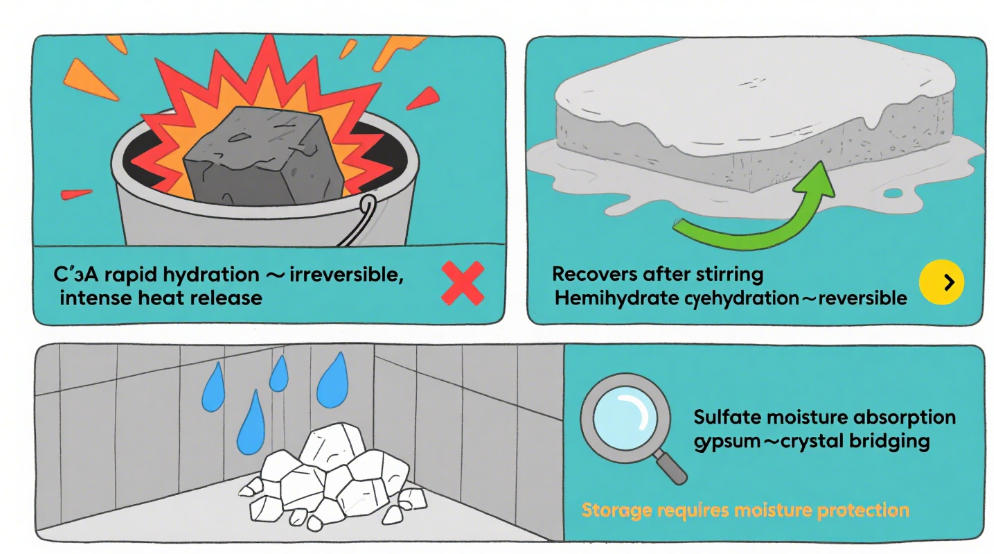
Flash Set: When C3A reacts rapidly with water, it causes the cement paste to harden quickly, accompanied by a large release of heat. This phenomenon is very unfavorable for concrete production; an appropriate amount of gypsum can prevent flash set.
False Set: Caused by the rehydration of hemihydrate gypsum or soluble anhydrous gypsum into gypsum. This structure can be destroyed by re-mixing, thereby restoring the normal setting of cement.