+82 10 9893 2839


Calcium Sulfoaluminate (CSA) cement has emerged as one of the most versatile specialty binders in modern construction, prized for its rapid setting, high early strength, and low-carbon footprint. However, for contractors, engineers, and procurement managers navigating the global market, one of the most common — and most consequential — decisions is selecting the correct CSA cement grade. Choosing the wrong strength class can lead to wasted material, compromised performance, or unnecessary cost overruns.
In this comprehensive guide, we break down the major CSA cement strength grades — from 42.5 to 72.5 and beyond — explain their technical differences, and map each grade to its ideal industrial applications. Whether you are sourcing material for overnight highway repairs, precast manufacturing, or self-leveling flooring, this article will help you specify with confidence.
CSA cement grades are designated by a numerical value — typically 42.5, 52.5, 62.5, or 72.5 — that represents the minimum compressive strength measured in megapascals (MPa) at 28 days, following standard testing protocols. While this convention mirrors that of Ordinary Portland Cement (OPC), the performance characteristics of CSA cement differ dramatically because of its unique hydration chemistry.
The core reactive phase in CSA cement is ye'elimite (C₄A₃Š), which reacts rapidly with water and gypsum to form dense, interlocking ettringite crystals. This reaction delivers most of the cement's strength within the first 24 hours — a stark contrast to OPC, which requires 28 days to reach its design strength. Consequently, a CSA cement's grade number tells only part of the story; its early-age strength development is often the more critical specification parameter.
| Grade | 28-Day Compressive Strength (MPa) | Typical 6-Hour Strength (MPa) | Typical 24-Hour Strength (MPa) | Primary Use Case |
|---|---|---|---|---|
| CSA 42.5 | ≥ 42.5 | 15 – 20 | 30 – 40 | General rapid repair, GRC, low-temperature work |
| CSA 52.5 | ≥ 52.5 | 20 – 25 | 40 – 50 | Precast components, non-shrink grout, shotcrete |
| CSA 62.5 | ≥ 62.5 | 25 – 35 | 50 – 65 | Highway/runway repair, self-leveling screeds |
| Super CSA 72.5 | ≥ 72.5 | 35 – 45+ | 65 – 80+ | Ultra-fast infrastructure repair, UHPC, extreme early-strength needs |
Note: Actual strength values vary by manufacturer, formulation, and curing conditions. Always consult the supplier's technical datasheet for project-specific performance data.
CSA cement grade 42.5 is the entry-level strength class in the CSA family, but "entry-level" should not be confused with "ordinary." Even at this grade, CSA cement dramatically outperforms OPC in early strength development. A typical 42.5 CSA cement can achieve 15–20 MPa within 6 hours and 30–40 MPa within 24 hours — strength levels that would take OPC several days to reach.
Grade 42.5 CSA cement offers an excellent balance of performance and cost, making it the most widely specified grade for general-purpose rapid-setting applications. Its initial setting time typically ranges from 12 to 30 minutes, adjustable with retarders, and it maintains reliable reactivity even at temperatures as low as 0–10°C.
Glass Fiber Reinforced Concrete (GRC) products: The low alkalinity of CSA cement (pH ≈ 11, compared to 13+ for OPC) protects embedded glass fibers from alkali degradation, extending the service life of architectural panels, cladding, and decorative elements.
Rapid repair mortars and water-stopping materials: Fast-setting plugging mortars for basement leaks, tunnel seepage, and construction joints rely on 42.5 CSA as a cost-effective base binder.
Low-temperature concrete work: Unlike OPC, which virtually stops hydrating below 5°C, CSA 42.5 maintains 5–8 times the early strength of OPC at 0–10°C, making it indispensable for winter construction.
Non-shrink grout: The micro-expansive nature of CSA hydration compensates for drying shrinkage, producing dimensionally stable grouts for equipment baseplates and structural anchoring.
For buyers seeking a reliable, all-around CSA cement at a competitive price point, CSA Cement 42.5 from Oreworld Trade delivers consistent quality backed by over 20 years of specialty cement export experience.
Grade 52.5 represents the mid-range sweet spot for many industrial applications. It delivers meaningfully higher early and ultimate strength than 42.5 while remaining cost-effective for high-volume usage. Typical 52.5 CSA cement reaches 20–25 MPa at 6 hours and 40–50 MPa at 24 hours, with a 28-day strength exceeding 52.5 MPa.
This grade is particularly popular in precast concrete manufacturing, where the ability to strip molds within 2–3 hours — without steam curing — directly translates to higher production throughput and lower energy costs. Factory operators can achieve 2–3 mold cycles per day compared to one cycle with OPC, effectively doubling or tripling capacity on the same production line.
Precast concrete components: Utility tunnels, wall panels, bridge girders, and pipe segments benefit from rapid demolding and elimination of steam curing kilns.
Shotcrete and sprayed concrete: The high cohesiveness and rapid strength gain of 52.5 CSA make it ideal for tunnel linings, slope stabilization, and mining ground support, with rebound rates significantly lower than OPC shotcrete.
Non-shrink grout and precision bedding: Higher strength grades ensure long-term load-bearing capacity under heavy machinery and structural columns.
High-sulfate-resistance applications: CSA cement's hydration products contain minimal portlandite (calcium hydroxide), providing inherent resistance to sulfate attack in soils and groundwater.
CSA cement grade 62.5 enters the high-performance tier, engineered for projects where early strength is mission-critical. This grade routinely achieves 25–35 MPa in just 6 hours and 50–65 MPa within 24 hours. For infrastructure owners, this means repaired pavements and structures can return to full service within a single overnight closure window.
The California Department of Transportation (Caltrans) has been a pioneer in this space, using belitic calcium sulfoaluminate (BCSA) cement concrete for its Individual Slab Replacement (ISR) program since the 1994 Northridge earthquake. The state has placed nearly 1,000 lane-miles of rapid-setting CSA concrete, demonstrating the material's proven performance at the 62.5 performance level.
Highway and bridge deck repairs: Overnight lane closures with 4–6 hour reopening windows require the strength development that only 62.5+ CSA cement can deliver.
Airport runway and apron repairs: Commercial aircraft impose extreme wheel loads; 62.5 CSA reaches 25+ MPa within 4 hours, safely supporting landing gear.
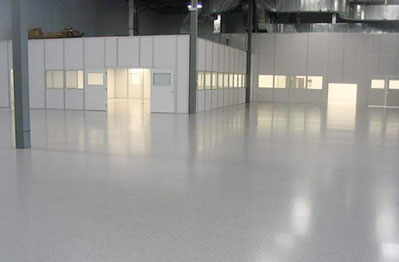
Self-leveling floor screeds and underlayments: The micro-expansive, near-zero-shrinkage properties of 62.5 CSA produce ultra-flat, crack-free floors for logistics warehouses and automated factories. Walkable the same day; ready for equipment installation the next.
Industrial flooring and wear-resistant toppings: High density and low porosity yield exceptional abrasion resistance in heavy-traffic facilities.
To understand how CSA cement achieves these remarkable strength gains, explore our in-depth analysis of CSA cement advantages and technical applications.
At the top of the performance ladder, Super CSA cement grade 72.5 (and higher) represents the pinnacle of rapid-hardening binder technology. With fineness exceeding 500 m²/kg specific surface area, this ultra-fine grade hydrates with exceptional intensity, delivering 35–45+ MPa within 6 hours and 65–80+ MPa within 24 hours.
Super CSA 72.5 is the material of choice when the construction schedule leaves absolutely no margin for waiting. It is the grade specified for emergency structural repairs, ultra-high-performance concrete (UHPC) formulations, and time-critical infrastructure projects where every hour of closure carries a seven-figure price tag.
Emergency structural repairs: Bridge girders, seismic retrofits, and load-bearing element repairs that must support traffic within hours.
Ultra-High-Performance Concrete (UHPC): The high fineness and reactivity of 72.5 CSA provide the binder foundation for UHPC mixes exceeding 150 MPa compressive strength.
Rapid-setting technical mortars: Precision restoration, facade repair, and industrial maintenance mortars requiring same-day return to service.
Sprayed concrete and shotcrete in extreme conditions: Underground mining and tunnel projects where immediate ground support is a matter of worker safety.
For projects demanding the highest early-strength performance, Super CSA Cement from Oreworld Trade is engineered to meet the most demanding specifications.
Selecting the appropriate CSA cement grade requires evaluating several project-specific factors. Use this decision framework to guide your specification:
The single most important criterion is the strength needed at the earliest critical time point. Ask: when must the structure be load-bearing? If traffic must open in 4 hours, you need 62.5 or 72.5. If demolding can wait 6–8 hours, 52.5 may suffice. For general repairs with a 24-hour reopening window, 42.5 often provides the best value.
Different applications impose different demands. Self-leveling floors require low shrinkage and fine particle size (favoring 62.5+). GRC products need low alkalinity (all CSA grades qualify, but 42.5 is most economical). Shotcrete needs high cohesiveness and rapid set (52.5–62.5 is typical).
CSA cement performs well in cold conditions, but lower temperatures slow hydration. For winter construction below 5°C, consider stepping up one grade to compensate for reduced reaction rates. Learn more about why CSA cement is ideal for rapid-hardening projects in cold-weather scenarios.
While higher-grade CSA cement carries a higher per-ton price, the total project cost often decreases. Faster construction means lower labor costs, fewer rental days, earlier revenue generation, and reduced social costs from closures. Always evaluate the total cost of ownership, not just the material price.
CSA cement's chemistry differs from OPC, so standard OPC admixtures may not perform as expected. Retarders, accelerators, water reducers, and polymer modifiers must be specifically validated for CSA systems. Always conduct trial mixes with your intended admixture package before full-scale deployment.
It is crucial to understand that CSA cement grades are not directly comparable to OPC grades. A CSA 42.5 and an OPC 42.5 may share the same 28-day strength number, but their performance curves are fundamentally different:
At 6 hours: CSA 42.5 reaches 15–20 MPa; OPC 42.5 reaches 1–2 MPa.
At 24 hours: CSA 42.5 reaches 30–40 MPa; OPC 42.5 reaches 10–15 MPa.
At 28 days: Both reach ≥ 42.5 MPa.
This means that for early-strength-critical applications, even a "low-grade" CSA 42.5 dramatically outperforms a "high-grade" OPC 52.5 in the first 24 hours. For a deeper technical comparison, read our article on CSA Cement vs. Portland Cement.
When sourcing CSA cement for international projects, buyers should prioritize suppliers with:
ISO 9001 certified production: Ensures consistent batch-to-batch quality control.
Export experience: Familiarity with international shipping documentation, packaging standards (25kg bags, 1-ton jumbo bags, or bulk), and customs procedures.
Technical support: Access to formulation guidance, admixture compatibility testing, and on-site troubleshooting.
Production capacity: Ability to meet large-volume orders with reliable lead times.
Third-party test reports: Verified strength, setting time, and chemical composition data.
Oreworld Trade (Tangshan) Co., Ltd. has been exporting specialty cements — including CSA cement and calcium aluminate cement — for over 20 years, with an annual export volume of approximately 30,000 metric tons. Our clients span across more than 50 countries, and we provide comprehensive technical support from specification through on-site application.
Yes. CSA cement is commonly blended with OPC at ratios up to 30% of total cementitious mass to create hybrid systems that combine CSA's rapid strength gain with OPC's long-term strength development and lower cost. However, blend formulations must be laboratory-validated for each specific application, as the sulfate balance and admixture interactions are complex.
When stored in intact, moisture-proof packaging under dry conditions, CSA cement has a shelf life of approximately 6 months. Because CSA cement is more hygroscopic than OPC, damaged or torn bags should be used immediately or discarded. Always store pallets off the ground and under cover.
CSA cement consumes most of its mix water during hydration, reducing bleed water and the need for prolonged wet curing. However, for optimal long-term performance — particularly in hot, dry, or windy conditions — a minimum of 24–48 hours of moist curing or the application of a curing compound is recommended. The rapid strength gain means curing periods are far shorter than for OPC.
Yes, CSA cement typically costs 2–3 times more per ton than OPC. However, in applications where its speed and performance are leveraged — rapid repairs, precast without steam curing, overnight infrastructure work — the total project cost is often lower due to reduced labor, shorter schedules, and earlier facility commissioning.
Choosing the right CSA cement grade is a decision that directly impacts project economics, construction speed, and long-term structural performance. From the versatile 42.5 grade for general rapid repairs to the ultra-high-performance 72.5 grade for emergency infrastructure work, each strength class is engineered to excel in specific applications.
The key is to match the grade to the project's critical time-to-strength requirement, environmental conditions, and total cost objectives. By understanding the performance characteristics of each grade and working with an experienced supplier, contractors and engineers can unlock the full potential of CSA cement — building faster, stronger, and more sustainably.
For personalized grade selection guidance, technical datasheets, or competitive quotations, contact the CSA cement specialists at Oreworld Trade. Our team is ready to support your next project with proven CSA cement solutions and global logistics expertise.
For a broader overview of CSA cement capabilities, explore our Calcium Sulfoaluminate Cement Wiki and discover the top 5 applications where CSA cement is irreplaceable.