+82 10 9893 2839


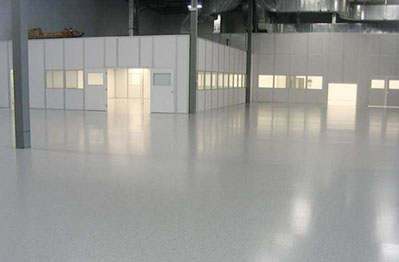
Self-levelling underlayments (SLUs) have become the flagship application of calcium sulfoaluminate (CSA) cement technology. Walk onto any large flooring project and the grey flowable compound being pumped across the slab is very likely CSA-based. The reasons are structural: SLU products live or die by the combination of very high flow and very low shrinkage — two properties CSA binders deliver better than any other cement family.
A self-levelling compound must satisfy a paradoxical set of demands:
Portland-based SLUs need substantial drying time before floor covering; gypsum-based ones cannot be used in wet areas and lack strength. CSA binders solve both problems: ettringite-dominated hydration provides early strength with minimal drying shrinkage, and formulated expansive versions can achieve near-zero shrinkage. This is why our self-levelling application programme is built around CSA technology.
A typical CSA-based SLU contains six functional components. Understanding each one's role is what separates a stable, pumpable formulation from a sticky, bleeding mess.
Most commercial SLUs use a binary blend of CSA cement and Portland cement, commonly in the range of 40–60% CSA + 40–60% OPC, plus anhydrite or hemihydrate gypsum to balance the sulfate supply. The blend controls set time and strength development: more CSA means faster strength gain; more OPC improves long-term surface hardness and economy. For premium fast-track products (foot traffic in 2–3 hours), higher CSA contents or grades such as our CSA Cement 62.5/72.5 are used.
Polycarboxylate ether (PCE) superplasticizers at 0.4–0.9% of binder weight create the flowing behaviour. Two cautions:
Graded silica sand (typically 0.1–0.8 mm) at 30–45% of the dry mix provides dimensional stability. Limestone filler or fine calcium carbonate rounds out particle packing and reduces binder demand. The goal is a maximum packing density with enough fine material to keep the paste stable during flow.
Citric acid (0.03–0.15%) or commercial retarders adjust open time; accelerators such as lithium carbonate push set earlier for ultra-fast products. In CSA/OPC blends, the sulfate source (anhydrite vs. gypsum) strongly influences both set and expansion — this is a tuning variable, not just a raw material.
Entrained air bubbles ruin the mirror-like self-smoothed surface. A defoamer (0.05–0.2%) is standard; some formulators also add a small air-entraining dose in exterior or freeze-exposed grades.
Redispersible polymer powders (1–3%) improve adhesion to the substrate, flexural toughness and abrasion resistance of the hardened layer.
Formulation is half the story; most SLU failures on site trace back to application errors:
| Property | Typical CSA SLU value |
|---|---|
| Flow (spread, ASTM C230 mini-cone) | 130–150 mm |
| Set (Vicat initial) | 25–60 minutes |
| Compressive strength, 1 day | 15–30 MPa |
| Compressive strength, 28 days | 35–55 MPa |
| Foot traffic | 2–4 hours |
| Floor covering installation | 12–48 hours |
| Drying shrinkage (28 d) | <0.05% (expansive grades ~0) |
For projects needing shrinkage compensation in thicker pours, our CSA expansive additive can be integrated into the blend.
Whether you are formulating a commercial SLU product or specifying one for a project, the fastest route to a reliable result is a systematic trial matrix: three binder ratios × two plasticizer doses × your substrate temperature. Our technical team provides grade selection, reference formulations and trial quantities — contact Oreworld to start.