+82 10 9893 2839


When engineers and architects think of High Alumina Cement (HAC)—also known as calcium aluminate cement (CAC)—their minds usually drift to roaring furnaces, incinerators, and foundry linings. It is a material historically celebrated for its ability to withstand temperatures exceeding 1500°C without losing its structural integrity.
However, looking at HAC solely as a refractory material ignores one of its most remarkable engineering superpowers: extreme chemical resistance.
While Ordinary Portland Cement (OPC) serves as the literal foundation of modern civilization, it possesses a glaring chemical vulnerability. It is highly alkaline and fundamentally susceptible to acid and sulfate attacks. HAC, by virtue of an entirely different chemical blueprint, steps in where OPC fails. It provides an indestructible defense mechanism against corrosive environments, opening up a vast spectrum of critical industrial applications.
To appreciate the chemical resilience of High Alumina Cement, we must first understand why standard concrete crumbles under chemical pressure.
Ordinary Portland Cement relies on the hydration of calcium silicates. This chemical reaction yields a byproduct called calcium hydroxide ($Ca(OH)_2$) and calcium silicate hydrate (C-S-H) gel. Calcium hydroxide is highly alkaline, which is great for protecting embedded steel rebar from rusting, but disastrous when exposed to external chemical threats:
Acid Attack: When acids come into contact with OPC, they react directly with the free calcium hydroxide, dissolving it and forming highly soluble calcium salts. This leaches the cement matrix, leaving behind a weak, porous, and crumbling structure.
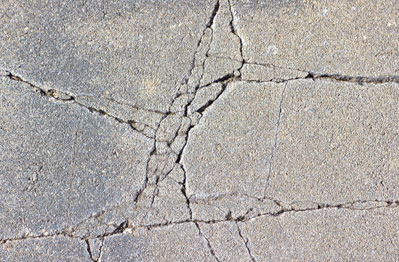
Sulfate Attack: When sulfates from groundwater or seawater penetrate OPC, they react with calcium hydroxide and alumina phases to form ettringite and gypsum. These new crystals occupy a much larger volume than the original compounds. This internal expansion creates immense pressure, causing the concrete to crack, spall, and eventually disintegrate.
High Alumina Cement completely bypasses these vulnerabilities because its primary raw materials are bauxite (aluminum ore) and limestone, rather than the clay and limestone mix used for OPC.
The dominant active phases in HAC are calcium aluminates (primarily $CA$, or $CaO \cdot Al_2O_3$), rather than calcium silicates. When HAC hydrates, it does not produce free calcium hydroxide. Instead, it forms calcium aluminate hydrates and a dense, protective gel of aluminum hydroxide ($Al(OH)_3$), also known as gibbsite.
This aluminum hydroxide gel is chemically amphoteric but highly stable in acidic environments down to a pH of about 3.5 to 4.0. It acts as a sacrificial, self-healing barrier. As the surface is exposed to mild acid, the aluminum hydroxide forms a dense, impermeable passivation layer that plugs the concrete's pores, dramatically slowing down any further chemical penetration. Furthermore, because there is no free calcium hydroxide to react with sulfates, the destructive formation of expansive ettringite is entirely prevented.
This unique chemical shielding allows High Alumina Cement to thrive in harsh, corrosive environments where traditional concrete would dissolve in a matter of months or years.
Subterranean sewer pipes and wastewater treatment facilities are hotbeds for Microbiologically Induced Corrosion (MIC).
In these enclosed, anaerobic environments, sulfur-reducing bacteria break down organic matter, releasing hydrogen sulfide gas ($H_2S$) into the headspace of the pipe. Above the waterline, aerobic bacteria (Thiobacillus) consume this gas and excrete biogenic sulfuric acid.
This localized acid concentration can drop the pH inside a sewer pipe to as low as 1.0. Under these conditions, an OPC pipe experiences catastrophic mass loss, with concrete dissolving at rates of several millimeters per year. HAC concrete pipe linings and mortars resist MIC through a dual mechanism: the aluminum hydroxide barrier blocks acid penetration, and the alumina ions exhibit a natural biostatic effect that inhibits bacterial growth on the concrete surface. As a result, HAC sewage infrastructures outlast Portland cement alternatives by decades.
The food and beverage industry is surprisingly brutal on industrial flooring. Processing plants deal with a constant barrage of organic acids:
Dairy plants deal with lactic acid from milk spillage.
Fruit juice facilities and wineries deal with citric, tartaric, and malic acids.
Breweries deal with acetic acid and hot washdowns.
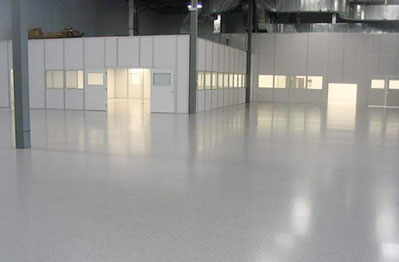
While these are safe for human consumption, they are aggressively corrosive to standard concrete floors. Compounding the issue, these plants must use harsh, high-pressure chemical cleaning agents to maintain strict hygiene standards. HAC-based screeds and floor toppings provide exceptional resistance to these organic acids and thermal shocks, ensuring that floors remain sanitary, crack-free, and smooth without demanding frequent, costly shutdowns for repairs.
In chemical manufacturing plants, refineries, and tank farms, secondary containment dikes are mandated to catch hazardous spills. Should a valve fail or a tank rupture, the containment basin must hold aggressive chemicals until they can be safely pumped away.
| Chemical Type | Portland Cement (OPC) Performance | High Alumina Cement (HAC) Performance |
| Sulfate Solutions | Poor (Severe expansion & cracking) | Excellent (Immune to sulfate attack) |
| Weak Organic Acids | Poor (Rapid leaching/softening) | Excellent (Passivating gel protection) |
| Pure Water / Distilled | Moderate (Leaches calcium over time) | Excellent (Highly insoluble matrix) |
| Strong Alkalis | Good | Moderate (Vulnerable to high pH > 12) |
HAC is heavily utilized in these containment structures, particularly where acidic chemicals, solvents, or sulfurous compounds are stored. Its low permeability prevents the chemicals from seeping through the concrete matrix into the local groundwater table, acting as a reliable environmental shield.
The marine environment presents a dual threat to concrete: physical destruction from wave action and chemical destruction from seawater. Seawater is rich in magnesium and sodium sulfates, which aggressively attack the paste of ordinary concrete.
HAC excels in coastal infrastructure because it offers a two-fold advantage. First, its chemical makeup eliminates the risk of sulfate attack. Second, HAC develops high early strength incredibly fast—often achieving full 28-day OPC strength within just 24 hours of pouring. This rapid curing allows marine engineers to cast tide-resistant structures, seawalls, and pilings that can withstand the physical hammering of the ocean immediately after installation without being washed away or compromised chemically by the incoming tide.
While HAC offers unparalleled chemical advantages, engineers must design with its specific material physics in mind—most notably a process called conversion.
Over time, the metastable calcium aluminate hydrates ($CAH_{10}$) formed during early curing naturally convert into more stable, denser forms ($C_3AH_6$ and crystalline $AH_3$). Because the converted hydrates occupy less volume, this process increases the porosity of the concrete and can result in a drop in long-term mechanical compressive strength if not accounted for during the initial mix design.
Modern concrete engineering solves this by adjusting the water-to-cement ratio (keeping it strictly below 0.40) and optimizing aggregate selections. When designed correctly, the converted HAC matrix remains incredibly dense, maintaining its legendary chemical resilience and structural integrity over a long lifespan.
High Alumina Cement is far more than a niche material built to withstand the fires of heavy industry. By swapping out the vulnerable calcium silicate chemistry of ordinary cement for a robust, sulfate-resistant, and acid-buffering calcium aluminate framework, HAC serves as an elite line of defense in the world's most corrosive environments. From the dark, acidic depths of municipal sewage networks to the pristine, hard-washed floors of food processing plants, HAC proves that its chemical resistance is just as vital to modern infrastructure as its legendary heat resistance.